Shin Splints in Runners: How to Identify, Prevent, and Treat Them
If you run regularly, chances are you’ve experienced some form of shin pain. Maybe it started as a mild ache after a run, then gradually became more noticeable. Or perhaps you increased your mileage, added hills, started running more frequently, or changed your shoes—and suddenly your shins were letting you know about it.
“Shin splints” is a common term for this type of pain, but not all shin pain is created equal. Understanding what you’re dealing with, why it happened, and how to modify your training can help you get back to running without turning a manageable problem into a more significant bone stress injury.
What Are Shin Splints?
The clinical term for shin splints is medial tibial stress syndrome (MTSS). It typically causes pain along the inside border of the tibia (shin bone), usually in the lower two-thirds of the leg.
Shin splints are generally considered an overuse injury. Your bones, muscles, tendons, and connective tissues are constantly adapting to the load you place on them through running. When the amount or intensity of loading increases faster than your body can adapt, symptoms can develop.
This doesn't necessarily mean that you are weak, that your running form is bad, or that you need to stop running altogether. More often, it's a sign that your overall training load has temporarily exceeded your current capacity.
Common reasons runners develop shin splints include:

A sudden increase in mileage
Adding speed work or hills
Increasing the number of days you run
Returning to running after a break
Changing running surfaces
Increasing training intensity
Changing footwear
Starting a new sport or adding another high-impact activity
Insufficient recovery between training sessions
Sometimes there isn't one obvious cause. Your body may simply be telling you that your current training load needs to be adjusted.
How Do You Know If You Have Shin Splints?
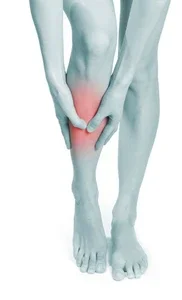
Shin splints typically cause a diffuse, aching pain along the inside of the shin.
A few characteristics that are common with MTSS:
Pain occurs along a relatively broad area rather than one very specific spot.
It may initially appear during or after running.
Symptoms may be worse at the beginning of a run and improve as you warm up.
Pain can become more persistent as the condition progresses.
The area may be tender to touch along the inside border of the shin.
Symptoms are often related to running or other impact activities.
But here's the important part:
Not all shin pain is shin splints.
A bone stress injury can also cause shin pain, and the treatment is different.
Pain that is very localized to one small area, progressively worsening, present with walking or everyday activities, or occurring at rest should be evaluated by a medical professional. Significant pain with hopping or impact can also be a warning sign.
If you're having trouble walking because of your shin pain, that's a good reason to get evaluated rather than simply stretching more and hoping it goes away.
Other conditions, including exertional compartment syndrome and nerve-related problems, can also cause lower-leg pain.
When in doubt, get it checked out. An evaluation can help determine whether you're dealing with an irritated muscle/tendon system, MTSS, a bone stress injury, or something else entirely.
Why Do Shin Splints Happen?
It's tempting to blame shin splints on one thing: your shoes, your running form, tight calves, or weak muscles.
In reality, it's usually more complicated.
Running places a large amount of repetitive load through your lower extremity. Your body is very good at adapting to that load—as long as the rate of loading is appropriate for your current capacity.
Think about training load as a balance:
Training stress → adaptation → increased capacity
If training stress suddenly jumps faster than your body can adapt, you may start to develop symptoms.

For example:
You normally run 15 miles per week.
You feel good, so you jump to 25 miles.
Then you add hills.
Then you add a speed workout.
Then you run your long run on trails.
None of those things are inherently bad. The problem is that you've made several changes at once, dramatically increasing the demand on your body.
This is why training progression is one of the most important pieces of shin splint prevention.
Preventing Shin Splints
There isn't a magic exercise or shoe that guarantees you'll never develop shin pain. Instead, prevention is about making your body capable of handling the demands you're placing on it.
1. Increase Your Training Gradually
One of the most common triggers for shin pain is a sudden change in training.
This doesn't mean you need to follow a rigid “10% rule.” Your appropriate progression depends on your training history, experience, current fitness, and what else you're doing outside of running.

Instead, think about changing one variable at a time.
If you're increasing mileage, consider keeping your speed and hills relatively consistent.
If you're adding speed work, don't simultaneously make a huge jump in mileage.
If you're returning after time off, give your body time to rebuild its tolerance to impact.
Your goal is to gradually expose your body to more running so that it has time to adapt.
2. Strength Train Your Legs
A well-rounded strength program can help improve your capacity to tolerate running.
For runners with a history of shin splints, I commonly want to see strength throughout the entire lower extremity, including:

Calves
Soleus
Tibialis anterior
Feet and ankles
Quadriceps
Hamstrings
Glutes
Hips
You don't need an enormous strength program. Consistency matters much more than having a complicated routine.
Exercises such as calf raises, soleus raises, squats, split squats, step-ups, and single-leg work can all be useful starting points.
The specific exercises should be individualized based on your strength, running demands, and injury history.
3. Train Your Body to Handle Impact
Running is essentially a series of single-leg hops. Every time your foot hits the ground, your body has to absorb force, control it, and then produce force again—quickly and repeatedly.
That's why plyometric training can be an important part of a runner's strength program.
Plyometrics teach your muscles, tendons, and bones to handle rapid loading and impact, which is different from what happens during a slow, controlled strength exercise. You may have plenty of calf strength, for example, but still need to train your body to use that strength quickly and repeatedly.
Some examples of plyometric exercises include:

Pogos
Jump rope
Skipping
Hopping
Bounds
Box jumps
The important part is progression. For example, you might progress from double-leg pogos → single-leg pogos → hopping → bounding, depending on your current strength and symptoms.
The goal isn't to jump as high as possible.
The goal is to build your capacity to absorb and produce force quickly so your body is better prepared for the demands of running.
4. Pay Attention to Recovery
Your body adapts to training during recovery—not just during the workout itself.
If you're stacking hard runs, long runs, strength workouts, and other high-impact activities without enough recovery, your tissues may struggle to keep up.
Recovery doesn't necessarily mean sitting on the couch.
It might mean:
Alternating hard and easier running days
Taking a rest day
Getting enough sleep
Eating enough to support your training
Using lower-impact cross-training when appropriate
Avoiding multiple major training increases at once
5. Consider Your Shoes—But Don't Blame Your Shoes

Shoes can influence how running feels, but there isn't one universally “correct” running shoe.
If you recently changed shoes and developed symptoms, it may be worth considering whether the transition was too abrupt.
Likewise, if your shoes are significantly worn or you're suddenly running much more than usual, footwear may be one factor worth addressing.
But changing shoes isn't usually enough to fix shin splints if your training load is still exceeding your current capacity.
What Should You Do If You Already Have Shin Splints?
The answer isn't necessarily stop running completely.
Instead, the goal is to find the amount of running your body can currently tolerate while allowing symptoms to settle.
Step 1: Modify Your Training
Start by identifying what changed.
Ask yourself:
What did I do differently over the past few weeks?
Did you:
Increase mileage?
Add hills?
Start doing speed work?
Add another running day?
Return from a break?
Change surfaces?
Start a new sport?
Add more strength training?
Once you've identified the likely change, temporarily reduce the stress that is aggravating your symptoms.
That might mean decreasing mileage, removing speed work, avoiding hills, or taking a short break from running.
The goal is not necessarily complete rest forever. It's reducing the load enough to allow your body to recover while maintaining as much fitness as possible.
Step 2: Keep Moving When Appropriate

If running is painful, you can often maintain cardiovascular fitness through lower-impact activities such as cycling, swimming, or using an elliptical—assuming those activities are comfortable.
This can be particularly helpful for runners who hate the idea of “doing nothing.”
But if even walking or low-impact activity is painful, that's a different situation and warrants evaluation.
Step 3: Build Your Lower Body Strength
Running places a significant amount of repetitive stress on your lower body. Building strength throughout your legs can help improve your ability to absorb and produce force and increase your overall capacity for running.
This doesn't mean you need to spend hours in the gym or follow a complicated strength program. A consistent, well-rounded program that challenges your hips, thighs, calves, and feet and ankles can be valuable for runners.
The goal isn't to eliminate every muscle imbalance or find the one “weak” muscle responsible for your shin pain. Instead, think about building a strong, capable lower body that can handle the demands you're placing on it.
Strength training is also an opportunity to gradually increase the amount of load your body can tolerate. As your strength and capacity improve, you can progressively challenge yourself with more weight, repetitions, or more demanding movements.
And remember that strength is only one part of running capacity. Your body also needs to be able to handle the speed and repetitive impact of running. This is where, once tolerated, adding in plyometric training can be particularly useful.
Step 4: Gradually Return to Running
When you're ready to run again, resist the temptation to immediately return to your previous mileage.
Your cardiovascular system may feel ready before your musculoskeletal system is.
You may be able to run five miles without getting particularly winded, but your bones, muscles, and connective tissues may not yet be prepared for that amount of repetitive impact.
A gradual return allows those tissues to catch up.
You might start with walk/jog progressions or shorter, easier runs and gradually increase either duration, frequency, hills, or intensity rather than increasing everything simultaneously.
When Should You See a Physical Therapist?
You don't have to wait until you're unable to run.
A physical therapist can help determine:
Whether your symptoms are consistent with shin splints or something else
How much running you can currently tolerate
Which training variables may be contributing
Whether you have deficits in calf, foot, hip, or single-leg strength
How to modify your training without completely losing fitness
How to safely progress back to running
This is especially helpful if shin pain keeps coming back.
Recurring shin splints aren't necessarily a sign that you need to stop running. They may be a sign that your training plan and your body's current capacity aren't quite matching up.
The Bottom Line
Shin splints are common in runners, but they're not something you simply have to “push through.”
The key is understanding the difference between normal training soreness, an overload problem like MTSS, and a more significant injury such as a bone stress injury.
For most runners, the long-term solution isn't one magic stretch or exercise. It's a combination of:
Appropriate training progression + strength + recovery + gradual exposure to impact.
And if your shin pain is persistent, worsening, very localized, or affecting your ability to walk, get it evaluated.
The goal isn't simply to get your shins to stop hurting. The goal is to build a body that can handle the running you want to do.