What Is Your Pelvic Floor Actually Doing All Day?
When most people hear the words “pelvic floor,” they probably think about Kegels.
But your pelvic floor is doing a lot more than squeezing.
In fact, your pelvic floor is working quietly in the background all day long—whether you are sitting at your desk, walking to the kitchen, laughing with a friend, picking up your toddler, or heading out for a run.
So what exactly is it doing?
First: What is the pelvic floor?
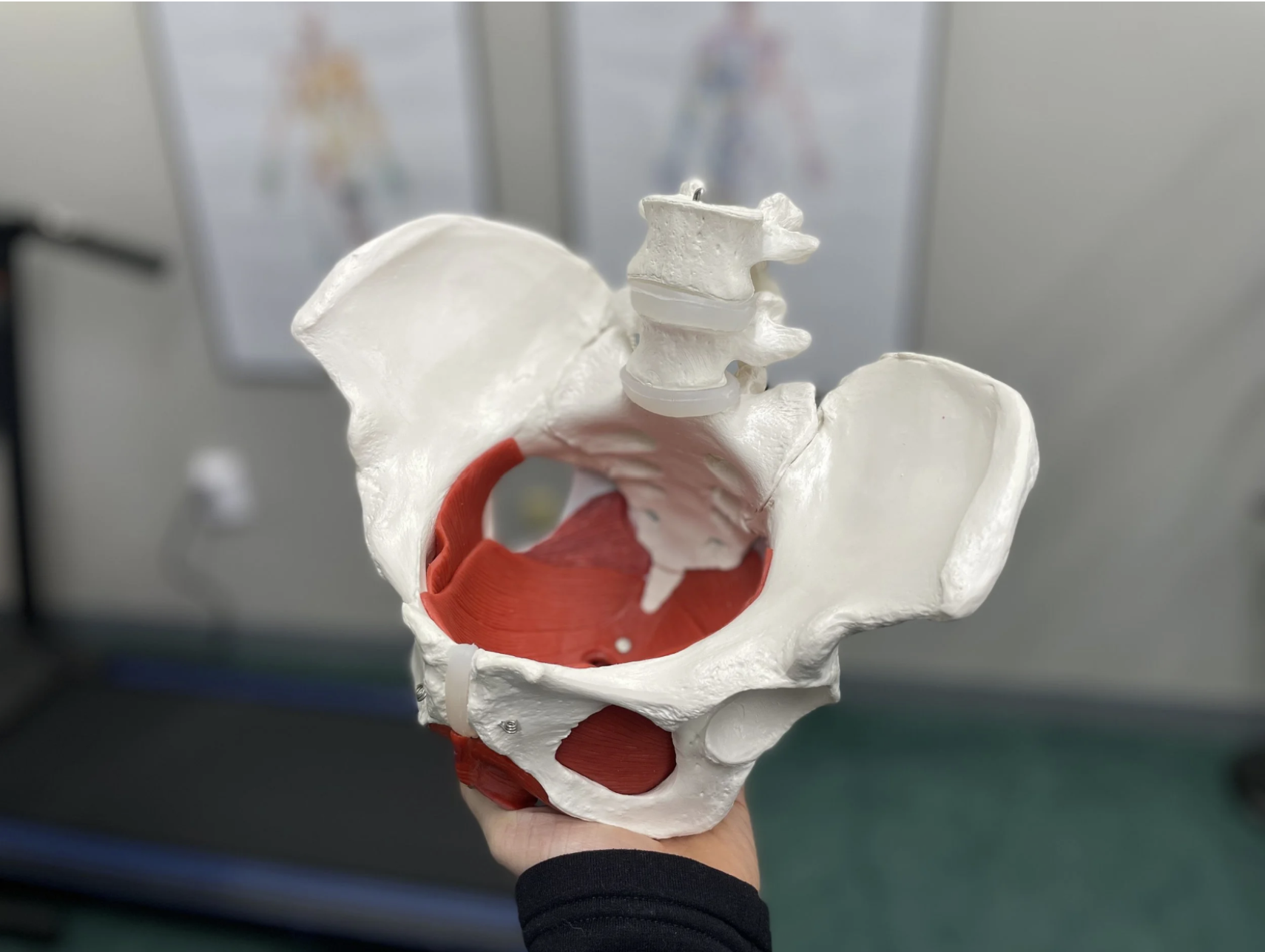
The pelvic floor is a group of muscles that forms the bottom of your pelvis. Think of it as a muscular hammock stretching from the pubic bone in the front to the tailbone in the back.
It helps support the organs in your pelvis, including your bladder, bowel, and reproductive organs. It also plays an important role in bladder and bowel control, sexual function, breathing, and movement.
And like any other muscle, it can contract, relax, lengthen, and respond to changes in load and pressure.
That last part is particularly important.
Your pelvic floor isn't supposed to be "on" all the time
At baseline, your pelvic floor has a small amount of activity or tension. This helps provide support without requiring you to consciously think about it.
But it isn't supposed to be maximally contracted all day.
Instead, your pelvic floor is constantly adjusting its activity based on what you're doing.

For example, when you're lying down and relaxing, you don't need the same amount of pelvic floor activity that you need when you're standing or carrying something heavy.
When you cough, sneeze, jump, or lift, pressure inside your abdomen increases. Your pelvic floor responds to that change in pressure.
When you need to urinate or have a bowel movement, your pelvic floor needs to relax enough to allow that to happen.
So rather than thinking of the pelvic floor as an on/off switch, it may be more helpful to think of it as a muscle system that is constantly making small adjustments.
What happens when you breathe?
This is where things get particularly interesting.
Your pelvic floor works as part of a larger system that helps manage pressure inside your abdomen. Your diaphragm sits at the top of that system, while your pelvic floor sits at the bottom.
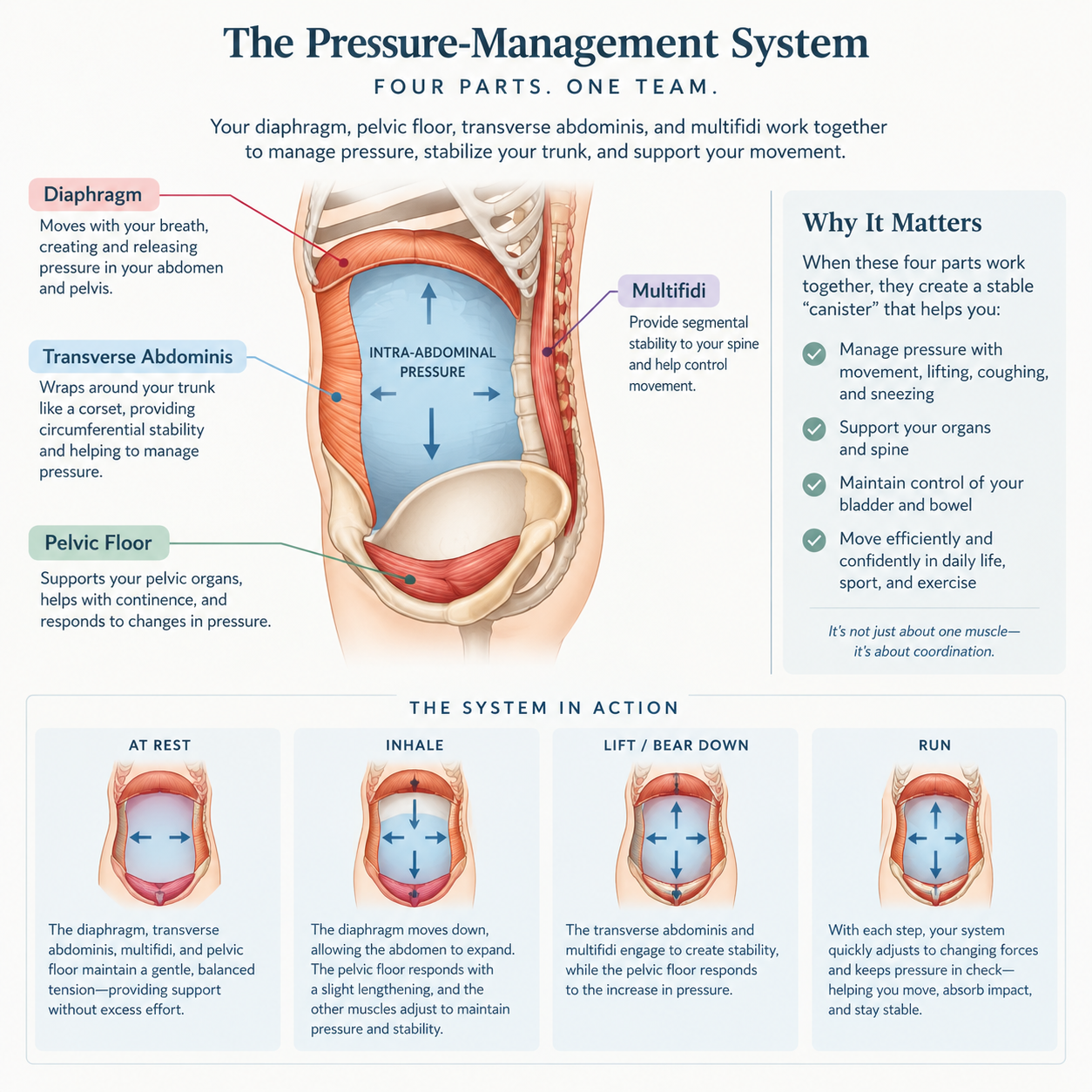
When you inhale, your diaphragm moves downward and the pelvic floor can respond by lengthening slightly.
When you exhale, the diaphragm moves back upward and the pelvic floor can respond by moving upward as well.
This doesn't mean that your pelvic floor simply mirrors your breathing perfectly with every breath. Bodies are much more complicated than that!
But breathing provides one example of how the pelvic floor is constantly coordinating with the rest of your body without you having to consciously control it.
What happens when you lift something heavy?
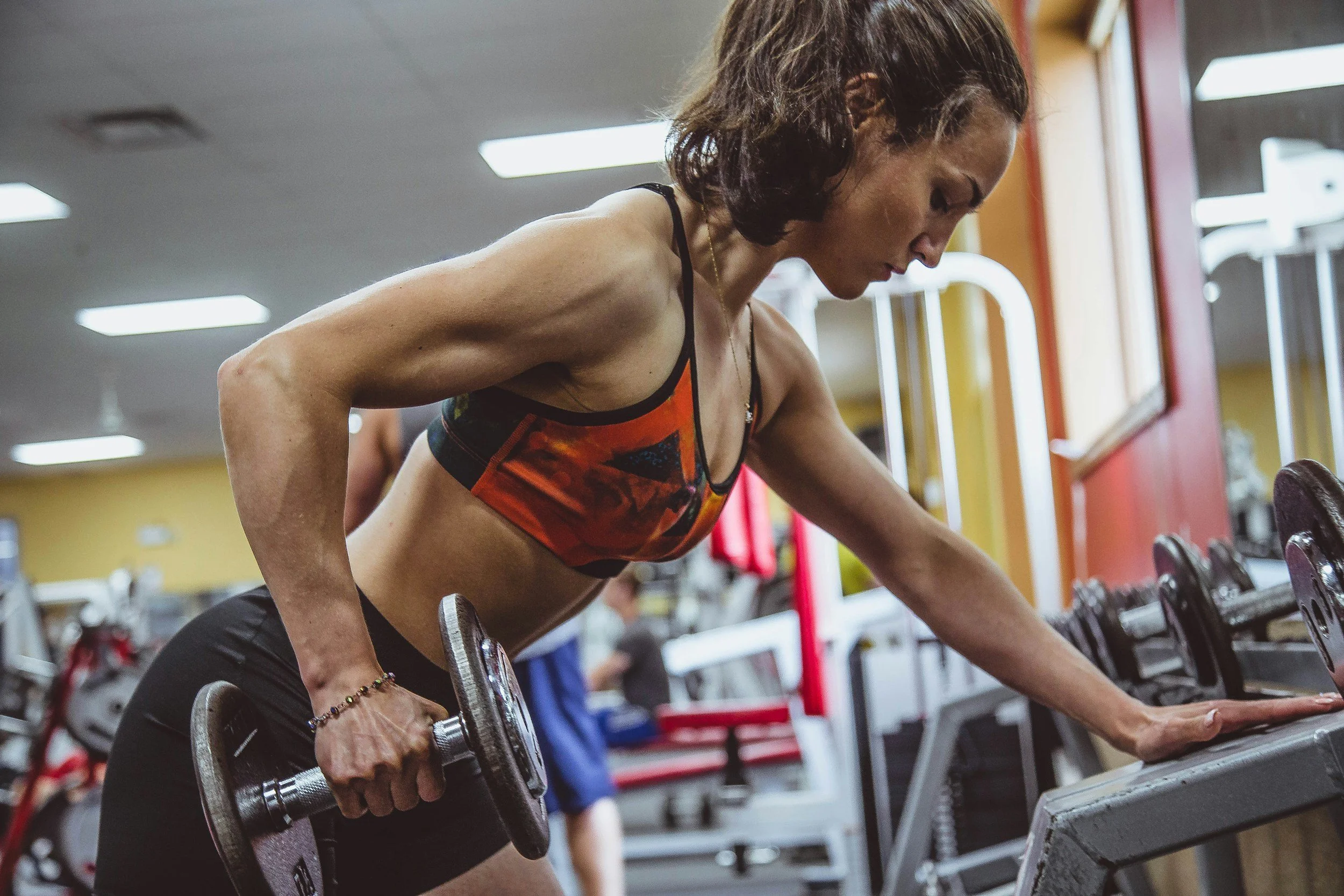
Let's say you're picking up a heavy dumbbell.
Your body needs to create and manage pressure to help stabilize your trunk. Your abdominal muscles, diaphragm, pelvic floor, and other muscles of your trunk all contribute to that process.
Your pelvic floor doesn't need to completely tighten and stay there throughout the entire lift.
Instead, it needs to be able to respond to the load.
This is one reason why pelvic floor function isn't simply about having "strong" pelvic floor muscles.
You need strength, but you also need the ability to relax, lengthen, coordinate, and respond to changing demands.
And what about running?

The same idea applies when you're running.
Every time your foot hits the ground, your body experiences a change in load. Your pelvic floor is part of the system responding to those repeated forces.
A recreational jog and a 20-mile run obviously place very different demands on the body. Your pelvic floor needs to be able to tolerate and respond to those demands repeatedly.
This is why pelvic floor health isn't just relevant to pregnancy and postpartum recovery. It can matter for runners, lifters, dancers, athletes, and anyone whose activities place repeated or increased demands on the pelvic floor.
So where do Kegels fit in?
Kegels—voluntarily contracting the pelvic floor muscles—can absolutely be useful.
But they are one piece of pelvic floor function, not the entire picture.
If your pelvic floor is weak and having trouble generating enough force, strengthening may be appropriate.
But if your pelvic floor is already working hard and having difficulty relaxing, simply doing more contractions may not address the underlying problem.
And sometimes the issue isn't strength at all. It may be coordination, timing, endurance, pressure management, or the way the pelvic floor is responding to a particular activity.
That's why pelvic floor physical therapy isn't one-size-fits-all.
Your pelvic floor is already doing a lot
You don't need to consciously think about your pelvic floor every time you take a breath, stand up, cough, or take a step.
That's actually the point.
A healthy pelvic floor is capable of automatically adjusting to what you're asking your body to do.
Sometimes that system needs a little help—whether that's learning how to relax an overactive pelvic floor, building strength after pregnancy, improving coordination for lifting, or gradually increasing tolerance for running.
The goal isn't to keep your pelvic floor clenched all day. The goal is to have a pelvic floor that can respond appropriately to whatever you're asking your body to do.